Events
-
-
Post-Conviction Resource Centers for Survivors and Practitioners
Following a conviction, many crime victims and survivors feel unprepared for the ongoing legal activity that can follow - such as appeals, parole hearings, or conviction and sentence reviews. The Post-Conviction Resource Center (PCRC) is a newly launched online hub that offers clear information and compassionate support during this often confusing stage for both survivors …
Continue reading "Post-Conviction Resource Centers for Survivors and Practitioners"
-
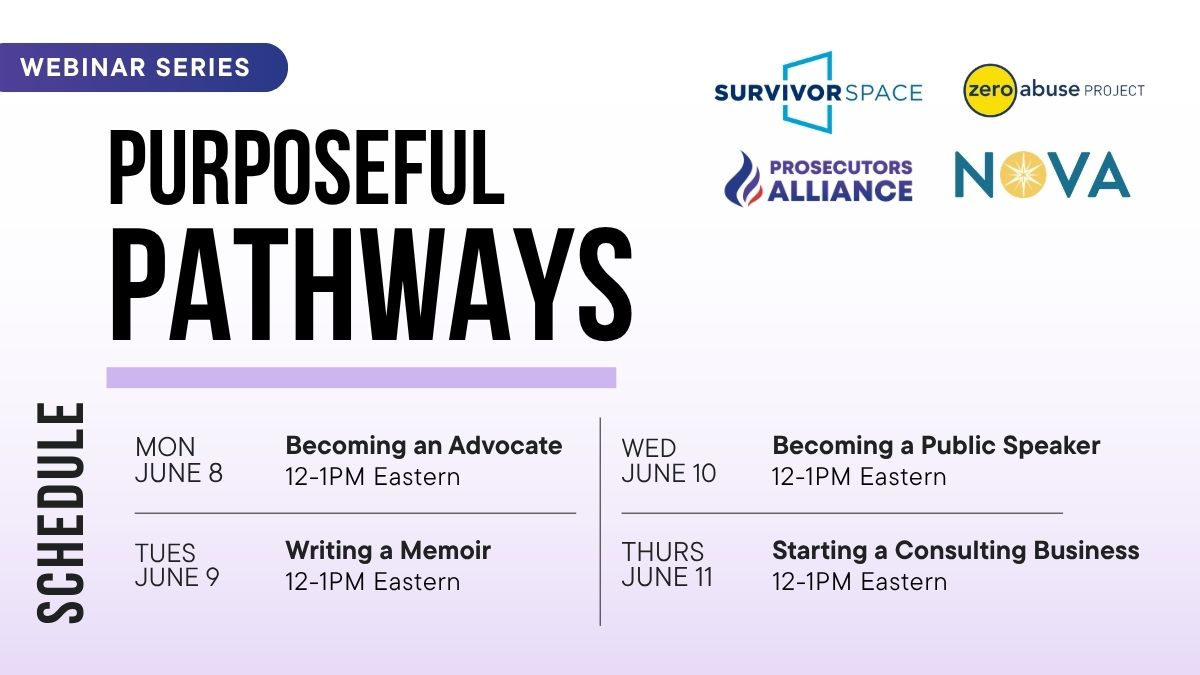
Survivor Space Purposeful Pathways Series
Adult survivors of child abuse or interpersonal violence frequently express a desire to share their lived experiences and hard-earned wisdom with others in impactful ways, yet don’t often have access to practical, supportive guidance in pursuing their passion. The Prosecutors Alliance has teamed up with SurvivorSpace and National Organization for Victim Advocacy (NOVA) to offer …
Continue reading "Survivor Space Purposeful Pathways Series"
-
What You Do Matters: Lessons from the Holocaust
“What You Do Matters" examines what can happen when government shifts the mission of police from protecting individuals to abusing basic human rights. Through historical context and survivor narratives from the Holocaust, the session invites participants into a reflective dialogue about the role of law enforcement in today's communities and the importance of core values …
Continue reading "What You Do Matters: Lessons from the Holocaust"
-
-
Foundations of Trauma & Trauma-Informed Care: Understanding Harm, Healing, and Resilience
This foundational training offers participants a grounding in the core principles of trauma and trauma-informed care. We'll explore what trauma is, how it shows up in people’s lives and bodies, and the profound ways it can shape behavior, relationships, and access to services. Participants will gain insight into the different types of trauma, including acute, …
-
Resentencing and Recidivism: What the Research Tells Us
What if the instincts driving incarceration decisions are systematically wrong, and the data can prove it? This training brings together two researchers whose work cuts straight to that question. Professor Hannah Shaffer of Harvard Law School links what prosecutors actually believe about the risk of violent re-arrest to the incarceration outcomes in their own cases. …
Continue reading "Resentencing and Recidivism: What the Research Tells Us"
-
-
When Self-Care Isn’t Enough: Addressing the Roots of Burnout in Victim Advocacy to Create Change
On a good day, victim advocates are tired. On the worst days, they're barely recognizable to themselves, hollowed out by the weight of work that never stops mattering. Burnout in victim advocacy isn't a weakness. It's a signal. And it demands more than a bubble bath. This workshop moves beyond surface-level self-care to examine the …
-
Immigration and Crime: What Does the Evidence Really Say?
Do immigrants commit more crime than non-immigrants? Do increases in immigration cause crime rates to rise in communities? What impact does immigration policy have on immigrants, immigrant families and immigrant communities? These questions are at the forefront of discussions about crime and public safety in the United States. In this talk, Professor Kubrin will review …
Continue reading "Immigration and Crime: What Does the Evidence Really Say?"
-
-
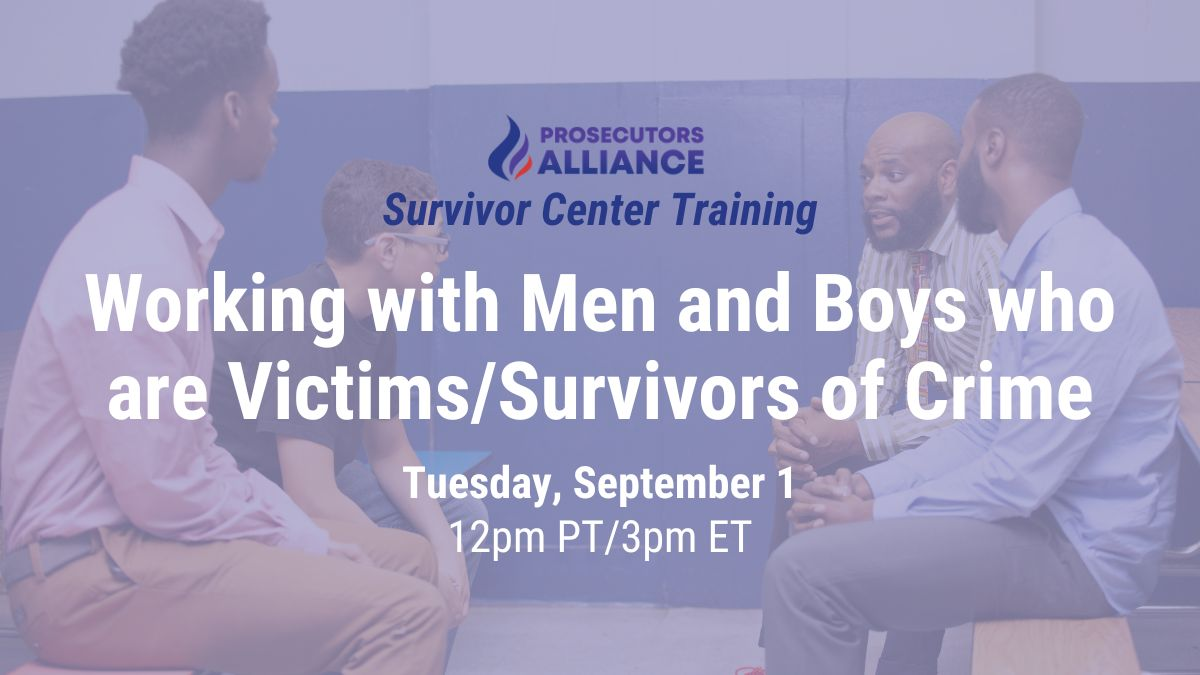
Working with Men and Boys who are Victims/Survivors of Crime
This workshop covers a variety of ways in which service providers can support and assist boys and men who are victims/survivors of crime. There is an emphasis on intimate partner violence and sexual assault crimes. The workshop also covers societal obstacles when it comes to men and boys asking for help and/or reporting crimes committed …
Continue reading "Working with Men and Boys who are Victims/Survivors of Crime"
-
Prosecutor-Led Diversion Programs and Recidivism: Evidence from Two Indiana Jurisdictions
Diversion is widely used by prosecutors as an alternative to traditional prosecution. But who actually gets the opportunity to participate? Dr. Tri Keah Henry presents findings from two Indiana prosecutor-led diversion programs. The study found that diversion participation was associated with a reduced probability of a new criminal case filing one year after the initial …
-
-
Hard Truths and Bad News: Trauma-Informed Conversations with Survivors
In this Survivor Center workshop, we will explore strategies for engaging in sensitive dialogues with victims of crime while upholding their rights to healing and justice on their own terms. Participants will learn how to approach these conversations with empathy and respect, ensuring that survivors feel heard and empowered. We’ll address the challenge of delivering …
Continue reading "Hard Truths and Bad News: Trauma-Informed Conversations with Survivors"
-
The Science of Second Chances
When is leniency appropriate? Which diversion programs actually reduce reoffending — and which don't? What does the research tell us about how prosecutors can use their discretion to improve public safety? Crime economist Jennifer Doleac will discuss these questions and more in a presentation on her book, The Science of Second Chances — described as …
-
-
Victim Support Beyond Conviction
Crime victims and survivors have traditionally been led to believe that a conviction will lead to closure and, thus, are often unprepared for the variety of potentially re-traumatizing case activity that can happen post-conviction. During this overview training, a victim/survivor will share their experience in the post-conviction space and what it has been like for …